 EN

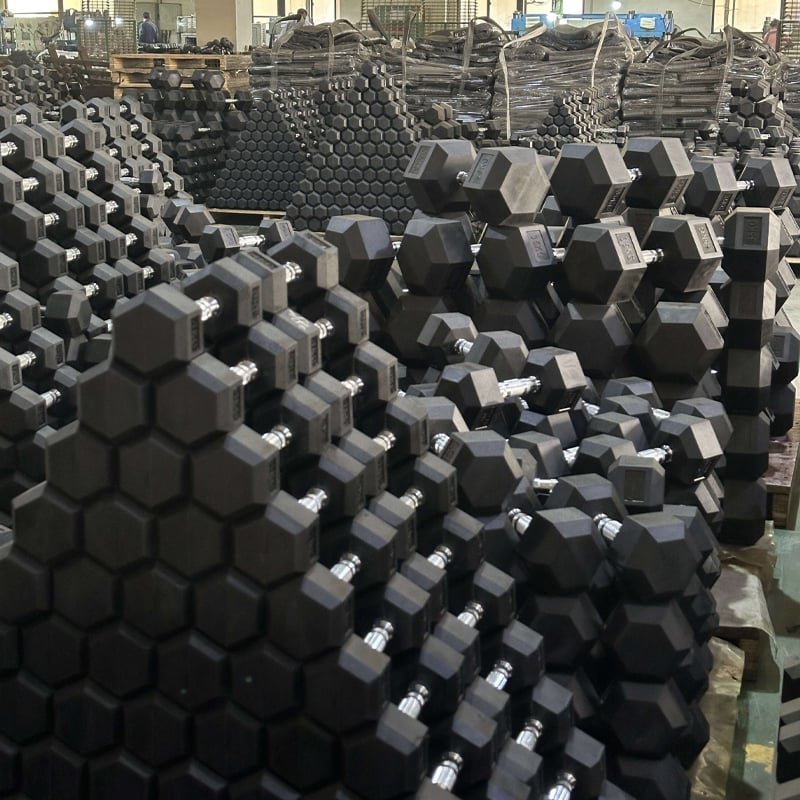
A manager outfitting a fitness floor faces a simple question: which configuration actually sells and stays in use? The right hexagon dumbbell set is rarely the widest range or a no-frills rack. It is the one whose weight increments, handle design, and storage logic fit how members train.
How Commercial Gyms Choose Weight Increments and Racks
A Floor That Finally Matched Demand
Last spring, a mid-size operator opened a second location and needed a complete hexagon dumbbell set that would not dominate the floor. The previous club bought mismatched pairs from three vendors, so members hunted for loads.
The new site served beginners and returning athletes, so a gentle low-end curve fit. The old layout forced a long rack-to-mirror walk that hurt motivation. A 3-tier wall rack with 2.5kg pairs from 2.5 to 10kg, then a 5kg step to 50kg, solved it. Dropped pairs fell and members stopped hunting for loads.
Reading Member Demand Before You Buy
Commercial floors rarely need a linear spread across every load. A 2.5kg pair gradient through the light range builds new-member confidence with small jumps, then a 5kg step above 10kg where strength gaps widen. Selectorized machines cover heavy singles, so the hexagon dumbbell set should complement, not duplicate, that capacity.
Matching the Set to Floor Space
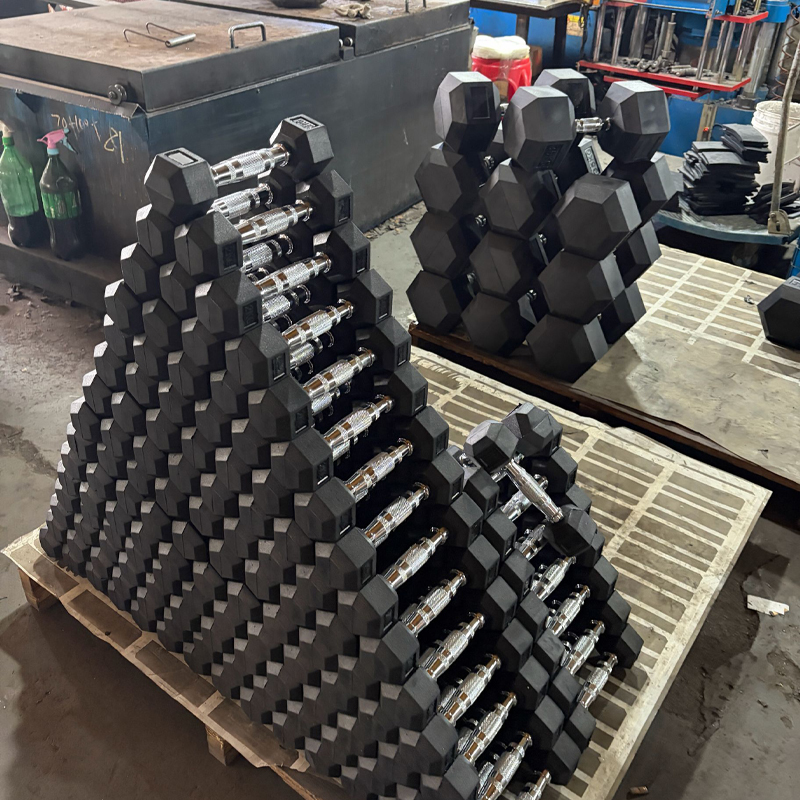
Footprint decides rack type. An A-frame suits a narrow corner and holds many pairs in a small area, while a 3-tier rack spreads load for faster class access. Tier spacing must clear the thickest rubber coating without crowding neighbors. A compact hexagon dumbbell set with an A-frame frees floor for mobility work.
Risk Analysis and Why Structure Matters
Storage Failures That Quietly Raise Risk
Loose pairs on the floor are a frequent injury source in a busy club. A tilted or overloaded rack shifts its center of gravity and can tip when a member pulls a heavy pair from the top. Poor tier spacing traps fingers and slows re-racking. The hexagon dumbbell set and its rack succeed or fail as a system, so evaluate them together.
Why Welded Heads and Rubber Coating Earn Their Place
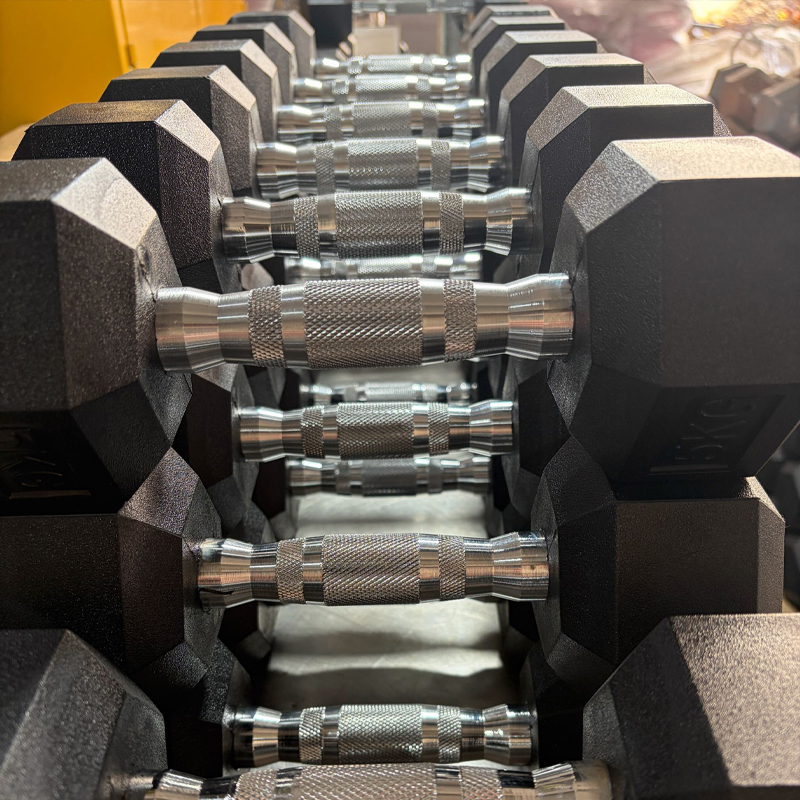
Friction-welded steel heads resist the impact separation that loose plates suffer after months of drops. Virgin odorless rubber absorbs contact noise and protects flooring, while a knurled handle gives a secure grip without tearing skin. Choosing a hexagon dumbbell set with these details controls long-term failure modes rather than hiding them.
Tier Spacing and Load Balance
On a 3-tier rack, the bottom tier carries the heaviest pairs to lower the center of mass, while light loads sit up top. Proper tier spacing prevents the hex shape from rocking, since flat sides let pairs rest without rolling. A stable, bolted footprint keeps the unit from walking when busy.
Specs, Standards, and a Practical Buying Checklist
Standards That Signal Real Quality
Commercial buyers should look past surface finish. When sourcing a hexagon dumbbell set, ask about ISO 9001 at the plant, which shows a controlled process, while ANSI and ISO references guide rack construction and load testing. OSHA housekeeping guidance pushes clear floors and proper storage; NFPA codes matter for spacing equipment away from exits. None replace a hands-on inspection, but together they narrow the field to serious suppliers.
Inspection, Maintenance, and Your Checklist
Before signing a bulk order, verify handle knurling depth, head-to-handle weld integrity, and rack weld points. On the floor, wipe the rubber coating weekly and check tier bolts monthly. Your hexagon dumbbell set should arrive with a clear spec sheet covering increments, rack type, and virgin odorless rubber.
Choosing the right configuration comes down to fit, not size. A well-chosen hexagon dumbbell set pairs a sensible 2.5kg-to-5kg increment curve with a rack whose footprint and tier spacing suit the room. Buy against a clear checklist, inspect before you commit, and the floor will serve members for years.
Frequently Asked Questions
Question What weight increments suit a commercial hex dumbbell rack? Answer Commercial floors usually start with 2.5kg pairs from 2.5 to 10kg, then move to a 5kg step up to 50kg. This gentle low-end curve builds beginner confidence, while wider steps suit stronger members. Selectorized machines handle very heavy singles, so the free-weight set fills the middle range. Match the increment pattern to your member mix.
Question Why does rack type matter as much as the dumbbells? Answer The rack controls safety and member flow. An A-frame saves footprint in tight corners, while a 3-tier rack spreads pairs for fast class access. Poor tier spacing traps fingers and slows re-racking. A stable, bolted unit keeps the center of mass low and prevents tipping during busy sessions. Choose the rack for your gym layout.
Question How should buyers inspect hexagon rubber dumbbells on arrival? Answer Check handle knurling depth for grip, confirm the head-to-handle weld shows no gap, and verify the rubber coating covers steel fully. Spin each pair to confirm balance, and test the rack's bolts and tier spacing. Document findings against the order, then rotate stock so wear spreads evenly. A short check per pallet prevents months of member complaints.
Question Which certifications indicate a reliable commercial supplier? Answer Look for ISO 9001 at the manufacturing plant, which signals controlled processes. ANSI and ISO safety references guide rack build and load testing, while OSHA housekeeping rules push clear floors that a good rack supports. NFPA spacing codes keep aisles open near exits. Certifications narrow the field but never replace a hands-on inspection before a large order.
Question Can a gym order dumbbells under its own brand? Answer Yes. Many commercial buyers request OEM private-label production, applying their logo to handles and racks. A standard hexagon dumbbell set ships in bulk with matched pairs and a storage rack. Confirm rubber spec, handle style, and lead time before committing, then validate a sample pair against your checklist to avoid surprises at delivery.