 EN

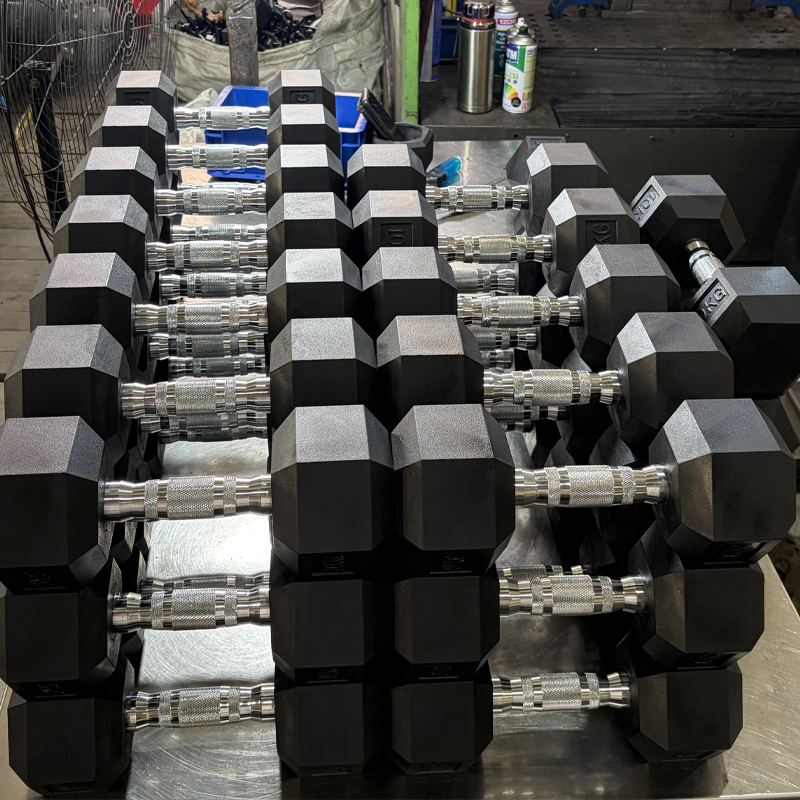
Importing a bulk fitness order across an ocean starts with choosing a supplier, but a gym renovation or restock raises one question: how to move a hexagon dumbbell set from an overseas factory to a local warehouse without inflated freight or crushed cartons. This guide shares field-tested ways to load containers smarter.
A Commercial Import Case: Loading a 20-Foot Container
Why a Bulk Hexagon Dumbbell Set Overloaded the Container
A procurement manager in Toronto booked a 20-foot container. The first plan assumed loose cartons fill gaps. Reality differed. Combined weight exceeded the payload rating before cubic space ran out, because steel is dense. A hexagon dumbbell set in the 5–50 kg range stacks heavy fast. Crews removed nearly a quarter of the cargo and booked a second shipment, doubling handling time.
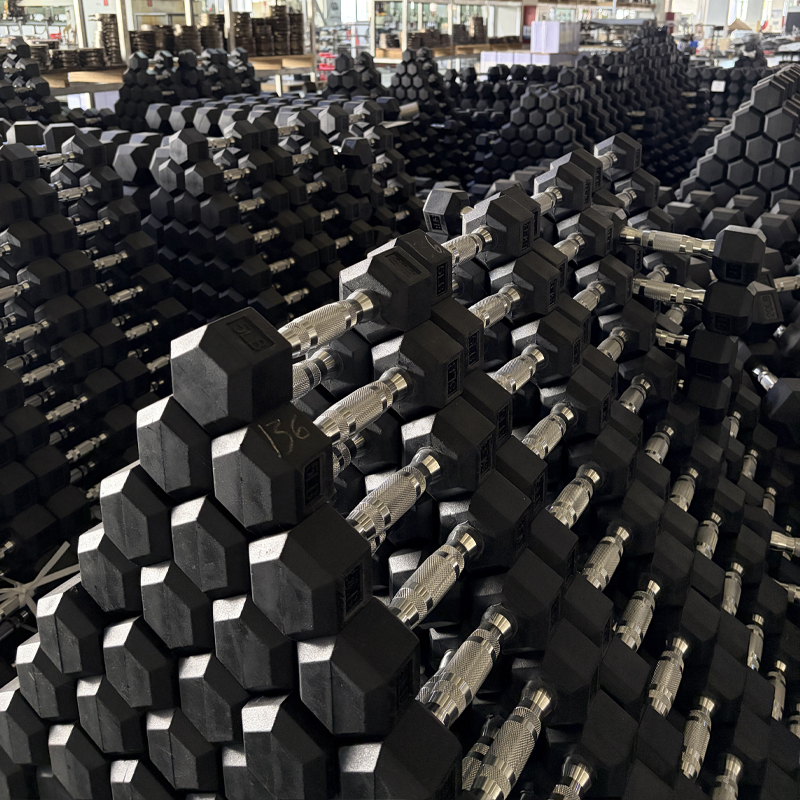
How Palletization Fixed the Weight Distribution
The revised plan used standardized wooden pallets wrapped in stretch film. Palletization built stable layers and made weight distribution predictable. Mapping heavy cartons near the floor and centerline kept the center of gravity low. This cut transit shifting. When a hexagon dumbbell set ships on uniform pallets, the gym receives cargo with intact packaging and no deformed handles, the earlier failure mode.
The Result: Lower Damage and Faster Customs Release
After re-palletizing, the second shipment cleared customs without inspection delays. Clean pallets and a correct packing list shortened the broker's work. Damage claims dropped to zero. The case shows a truth: factory-gate loading decisions decide whether a buyer absorbs extra freight or enjoys a smooth delivery.
Technical Principles Behind Safe and Compliant Loading
Operators importing a hexagon dumbbell set at scale must understand why equipment is built and packaged as it is. That knowledge turns loading into control.
Friction-Welded Heads and Carton Protection
A well-built hexagon dumbbell set uses friction welding to join steel heads to chrome handles without weak solder joints. That bond resists stacked-carton impact. The carton stays the first defense. Double-wall boxes with dividers prevent head-to-head contact, and edge protectors stop corners from crushing under pallet weight. Flat sides stop rolling in transit.
Moisture Control, Dunnage, and ISPM 15 Compliance
Ocean transit crosses humid zones with interior condensation. Desiccant packets and plywood boxes treated to ISPM 15 standards fight mold on the virgin rubber surface. ISPM 15 requires heat-treated wood packaging so pests do not cross borders. Compliant boxes avoid customs holds. Dunnage such as air bags fills voids and locks the load, while breathable wrapping limits trapped moisture.
Cubic Utilization and FCL Versus LCL Choices
Cubic utilization measures how much container volume the cargo occupies. A full container load (FCL) ships one buyer's goods and gives loading control. Less than container load (LCL) shares space and suits trial orders but adds warehouse handling. For a committed bulk purchase, FCL usually lowers per-unit freight and reduces damage-causing touches. Calculating density before booking prevents paying for air rather than steel.
Your Buying, Inspection, and Maintenance Checklist
Before booking, map the hexagon dumbbell set order against container limits and confirm the supplier's export experience. The steps below turn the case and principles into a routine.
Confirm Specifications and Inspect Before Loading
Buyers should request piece count, pair weights, and carton dimensions before signing. On inspection day, check for odorless rubber, straight handles, and clean welds. Photograph the loaded container and seal number. A packing list matching the commercial invoice speeds customs. Ask whether wood meets ISPM 15, since non-compliant material triggers port holds.
Transit Care and Long-Term Maintenance
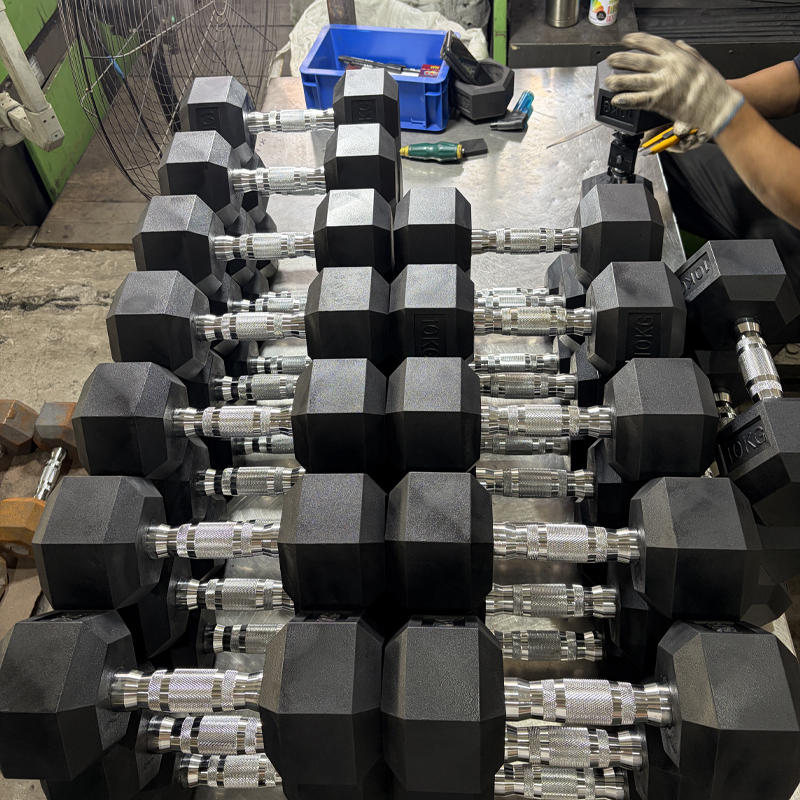
Once delivered, store dumbbells off damp concrete and rotate stock so lower pairs do not bear static load indefinitely. Wipe the rubber with a mild cleaner; avoid petroleum solvents that degrade the surface. Tighten loose collars during monthly checks. These habits extend the usable life of a commercial hexagon dumbbell set and keep equipment floor-ready for years.
Frequently Asked Questions
Question How is container capacity calculated for a dumbbell import?
Answer Start with the order's gross weight and carton dimensions. Compare weight against the payload rating and volume against internal capacity. Dense steel usually hits the weight limit first. Request the supplier's loading plan early, then verify cubic utilization so the booked container matches the actual cargo rather than an estimate.
Question Why does ISPM 15 matter for dumbbell packaging?
Answer ISPM 15 is the sea freight wood packaging standard. It requires heat treatment or fumigation to stop pest movement across borders. Non-compliant plywood boxes or pallets can be rejected or held at the destination port, delaying delivery and adding storage fees. Always confirm treatment marks before the container leaves the factory.
Question Should a small first order use FCL or LCL?
Answer LCL suits trial or restock orders under roughly half a container, since it shares space and lowers upfront cost. FCL becomes practical once volume justifies a full box and offers clear control over loading and handling. Compare per-unit freight after consolidation fees, and weigh the extra warehouse touches LCL adds against the savings.
Question What packing protects rubber dumbbells during transit?
Answer Double-wall cartons with internal dividers keep heads from contacting, while edge protectors prevent corner crush under stacked weight. Plywood boxes treated to ISPM 15 add a rigid outer shell. Inside, desiccant controls moisture, and dunnage air bags lock the load. Palletizing uniform cartons keeps weight distribution stable through ocean movement.
Question Can dumbbells be loaded together with other gym equipment?
Answer Yes, mixing is common, but plan weight distribution carefully. Place dense items like a hexagon dumbbell set low and centered, with lighter benches above. Build a loading map so the forklift crew balances the center of gravity and avoids overloading one side. A clean packing list and matched invoice keep clearance straightforward at arrival.